
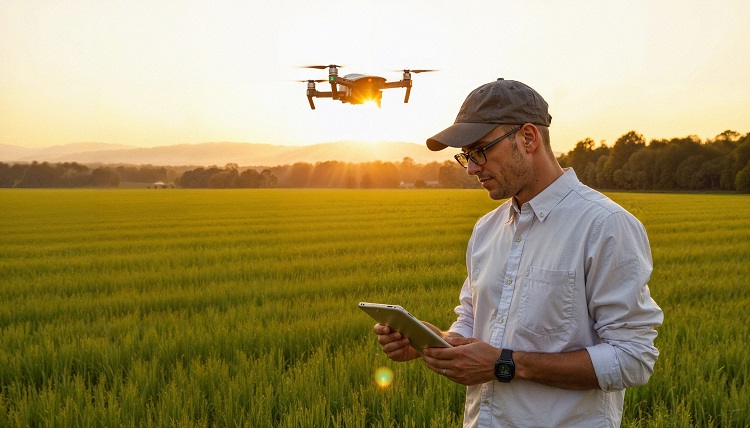
Farmers today are dealing with unpredictable problems in agriculture. With weather changes causing crop failure, a rise in input costs, and overuse of remedies, the end result is financial loss. These challenges have become a significant threat to farmers’ profitability and sustainability.
There is an innovative and effective way to manage everyday problems in agriculture. Digital transformation; it is not just a change but a shift that redefines daily farming practices.
From informed decision-making with sensors to market access with Blockchain technology, it provides real-time data to the farmers. In this blog, we will learn more about digital agriculture, its major benefits, and how farmers can integrate advanced technologies in their farms.
What Is Digital Transformation In Agriculture
Digital transformation means using digital technology in every stage of farming, that is, from sowing to harvesting.
It is not just a technical upgrade, but a fundamental change in farming practices, enabled by Artificial Intelligence (AI) and Internet Of Time (IOT), along with data-driven technologies such as sensors and drones for optimizing farm management.
These advanced technologies are used to monitor soil conditions, pests, and diseases in crops. The primary motive behind digital transformation is to manage workflows, strategies, and resources to improve the supply chain.
Key Reasons Agriculture Must Adopt Digital Transformation
With traditional farming methods, farmers face severe challenges like limited market access and a higher risk of crop loss. Digital transformation enables farmers to access real-time information on weather conditions, such as humidity and temperature, which can make crops more vulnerable to disease.
With this data, farmers can take early action against them and protect crops, minimizing the need for broad-spectrum fungicides.
Moreover, emerging technologies such as satellite imagery and other smart devices help track soil water needs, enabling precise irrigation and conserving water. Digital agriculture assists farmers in monitoring the overall performance of the yield and making wise decisions with advisory apps and software tools.
Key Technologies In Agriculture Every Farmers Should Know
Here are five key technologies that reshape agriculture and contribute in improving the efficiency of the farm, increasing yields, as well as promoting great sustainability.
Internet Of Things (IOT):
IOT connects farmers with the field using sensors that provide live data on nutrient content in the soil, moisture level, and plants. Devices like a pH monitor and livestock tracker are attached to the farm that sends live notifications to smartphones. It also helps in detecting weeds and diseases with accuracy, providing data-driven insights.
Drone Technology:
Drones can survey 500 to 700 acres per hour, depending on their type and battery capacity. It correctly detects crops and helps farmers plan field treatment applications, enabling precise agriculture. One of the best uses is that drones can plant seeds in large, hard-to-reach areas, saving labourers’ time and energy.
AI Driven Systems:
A robotic system with Artificial Intelligence (AI) is capable in recognizing weeds by capturing an image. They are trained to distinguish between crop leaves and weed leaves, allowing them to make decisions for managing unwanted plants. It also has an inbuilt Global Positioning System (GPS) and other technologies that can spray herbicides on weeds based on their growth stage.
Blockchain:
Blockchain is a digital system that is used to improve transparency between buyers and sellers. It collects the data on which seeds and inputs are used, when crops are harvested, and traces the supply chain, which assists farmers in securing better prices. This advanced technology also builds consumer trust and helps them verify crop authenticity.
Smart Irrigation:
A high-tech, innovative irrigation system uses technologies such as sensors that measure soil temperature, soil moisture, and humidity. It also analyzes the need for water based on the crop type and its growth stage. The system automates the irrigation process and controls water flow, improving the overall health of the soil and crops.
Benefits Of Digital Transformation In Agriculture
Digital Transformation is redefining farming with the latest technologies. It resolves issues such as excessive use of agro-inputs, unpredictable crop performance, and water scarcity.
It is a solution-focused approach towards improving production and enhancing resource efficiency. Here are some major benefits of digital agriculture in detail.
- Cost-effective: Precise use of resources such as fertilizer, insecticide, herbicide, and fungicide reduces product waste and prevents unnecessary expense.
- Complete Pest Management: Early detection of pests enables quick, focused action, reducing the risk of infestations and protecting crops.
- Improves Market Access: It provides farmers with information on current market prices and demand, thereby maximizing their overall profits.
- Climate Resilience: Satellite imagery analyzes climatic conditions in advance and provides farmers with data, giving them time to adapt to changing weather.
- Sustainable Farming: With the help of smart irrigation technologies and AI, the use of chemical products is reduced, helping maintain the environment.
Steps To Start Digital Transformation At Your Farm
Digital transformation requires a strategic investment, affordable technology, planning, and practical training. Taking these small steps towards a digital transformation in agriculture helps in building a smart farming system.
- Identify the difficulties in the farm, including pest infestations, unwanted vegetation, and labour-intensive tasks.
- With this, you will get a clear idea of which farm area needs digital technology.
- Collect information on soil quality, crop growth, and weather conditions by using tools.
- Invest in technologies like sensors, AI-driven software, mobile apps, and drones that fit your budget.
- Use an automated sprinkler or drip irrigation method to improve the quality of the fruits.
- Regularly monitor and track the field to understand the impact of this technology and expand gradually.
The Future Of Digital Agriculture
Digital transformation is a revolution that most farmers will adopt to increase farm productivity and reduce labour costs. Digital transformation is not replacing farmers, but rather minimizing their work by adding technologies such as AI, drones, and IoT.
These robotics and automation tools will solve real problems, such as inefficient resource use, and handle tasks like spraying.
This technology will ensure better planning and sustainability in modern agriculture. By adopting advanced tools, farmers can definitely build a profitable, stable, risk-free, and strong future.
FAQs
1) Will digital agriculture replace Indian farming methods?
No, digital agriculture will not replace Indian farming methods; instead, it will enhance them. Various digital tools like sensors, drones, and AI allow farmers to make data-driven decisions, improve the use of agricultural inputs, and assist with better market access.
2) How can small farmers adopt digital transformation?
Small farmers can adopt digital transformation by using simple mobile apps for market linkage and sales. They can also use AI to monitor soil health, pests, and disease symptoms for more precise farming.
3) How does digital transformation improve crop yield?
With the help of digital transformation, farmers can access real-time data on crop nutrient and water requirements, enhancing crop development. It also alerts farmers to threats from pests and diseases, helping prevent crop loss.