
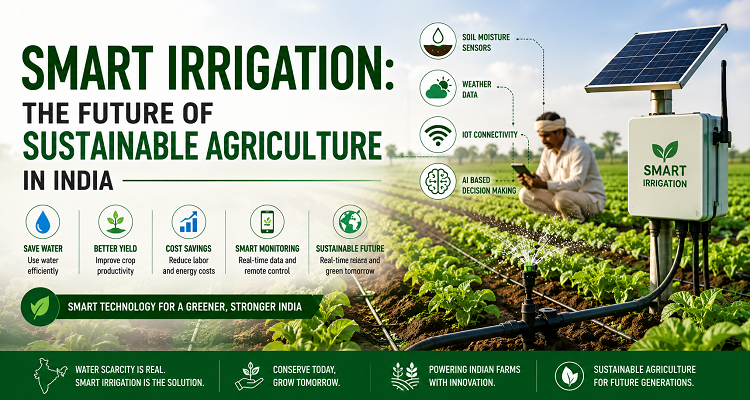
Indian agriculture is undergoing a significant transformation. Farmers today face challenges that previous generations rarely encountered, including erratic rainfall, declining groundwater levels, rising cultivation costs, and increasing climate uncertainty. As water becomes one of the most valuable resources in farming, efficient irrigation management is no longer optional—it is essential.
Smart irrigation has emerged as a promising solution that enables farmers to use water more efficiently while improving crop productivity and farm sustainability. By combining technology with agricultural practices, smart irrigation is helping reshape the future of Indian farming.
India’s Water Challenge in Agriculture
Agriculture accounts for nearly 80 per cent of India’s freshwater use. For decades, irrigation has been the backbone of agricultural production, particularly in regions with unreliable rainfall.
However, excessive groundwater extraction, prolonged drought periods, and changing weather patterns have created increasing pressure on water resources. Many farmers now find themselves pumping water from deeper borewells while facing rising energy costs and declining water availability.
These challenges highlight the need for irrigation methods that deliver the right amount of water at the right time.
Understanding Smart Irrigation
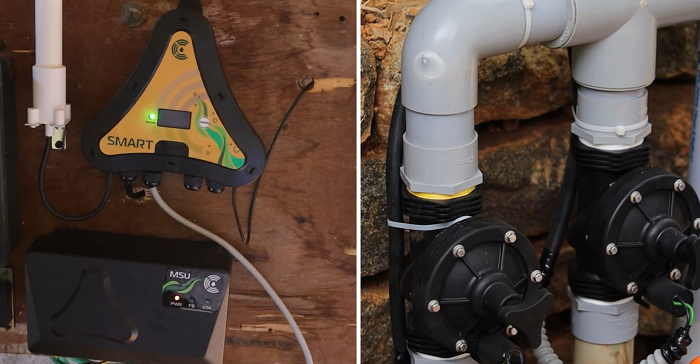
Smart irrigation refers to irrigation systems that use data, automation, and monitoring technologies to optimize water application.
Traditional irrigation schedules often rely on fixed timings or visual observations. In contrast, smart irrigation systems make decisions based on actual field conditions, such as:
- Soil moisture levels
- Weather conditions
- Crop water requirements
- Temperature and humidity
- Rainfall forecasts
The goal is simple: provide crops with adequate water while minimising waste.
Why Traditional Irrigation Methods Are Becoming Less Effective
For many years, farmers followed irrigation schedules based on experience and seasonal patterns. However, climate variability has made these patterns less predictable.
A field irrigated according to a fixed schedule may receive too much water after unexpected rainfall or too little during periods of extreme heat.
Common problems associated with conventional irrigation include:
- Over-irrigation
- Waterlogging
- Nutrient leaching
- Increased weed growth
- Excess energy consumption
- Uneven water distribution
These issues not only waste resources but can also reduce crop performance.
Benefits of Smart Irrigation
Improved Water Efficiency
Smart irrigation ensures water is applied only when crops require it. This reduces wastage and improves water-use efficiency across the farm.
Higher Crop Productivity
Maintaining optimal soil moisture levels supports healthy plant growth, stronger root development, and improved nutrient uptake.
Reduced Labor Dependency
Automation can reduce the need for frequent field visits and manual operation of irrigation systems.
Energy Savings
Efficient irrigation schedules reduce unnecessary pump operation, leading to lower electricity or diesel costs.
Better Resource Management
Access to field data allows farmers to make more informed decisions regarding irrigation, fertilization, and crop management.
The Role of Soil Moisture Monitoring
One of the most important components of smart irrigation is soil moisture monitoring.
Many farmers assume that water reaching the field automatically means crops are receiving sufficient moisture. In reality, moisture availability within the root zone can vary significantly depending on soil type, weather conditions, and crop stage.
Soil moisture monitoring helps determine:
- When irrigation is required
- How much water should be applied
- Whether crops are experiencing water stress
- How effectively water is reaching the root zone
This information enables more precise irrigation decisions.
Smart Irrigation and Climate Resilience
Climate change is increasing uncertainty in agricultural production.
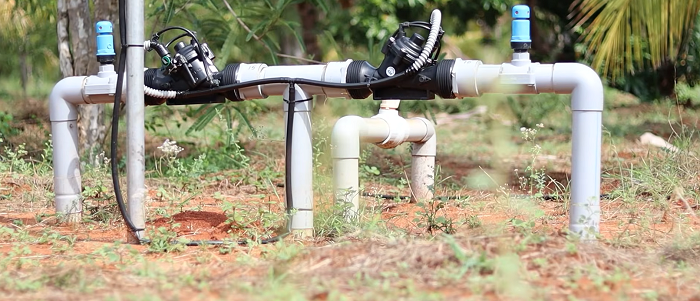
Unpredictable rainfall patterns, extreme temperatures, and prolonged dry periods make water management increasingly complex. Smart irrigation systems help farmers adapt by responding to actual environmental conditions rather than relying solely on traditional schedules.
By improving irrigation efficiency, farmers can better withstand drought conditions and maintain productivity during challenging growing seasons.
Challenges to Adoption
Despite its advantages, the adoption of smart irrigation technologies remains uneven across India.
Some common barriers include:
- Initial investment costs
- Limited technical awareness
- Lack of training opportunities
- Connectivity limitations in remote areas
- Access to reliable support services
Addressing these challenges will require collaboration between governments, research institutions, agricultural organizations, and private-sector stakeholders.
The Future of Water Management in Agriculture
The future of agriculture will depend on producing more food with fewer natural resources.
As water scarcity continues to increase, technologies that improve irrigation efficiency will become increasingly important. Smart irrigation represents a shift from reactive farming practices toward data-driven decision-making.
Future developments may include greater integration of:
- Artificial intelligence
- Satellite monitoring
- Weather forecasting
- Remote sensing technologies
- Automated farm management systems
These innovations have the potential to make agriculture more productive, resilient, and sustainable.
Conclusion
Smart irrigation is rapidly becoming an important component of modern agriculture in India. By improving water-use efficiency, supporting crop productivity, and helping farmers adapt to changing environmental conditions, it offers practical solutions to some of agriculture’s most pressing challenges.
As the agricultural sector continues to evolve, adopting smarter water management practices will be critical for ensuring food security, conserving natural resources, and building a sustainable future for Indian farming.
Author Bio
Raja Kumaran is a digital agriculture enthusiast and content writer focused on smart farming, irrigation technologies, water conservation, and sustainable agriculture. He regularly writes about emerging agricultural innovations, climate-resilient farming practices, and practical solutions that help farmers improve productivity while conserving natural resources. His work aims to bridge the gap between technology and agriculture through informative and research-driven content.